
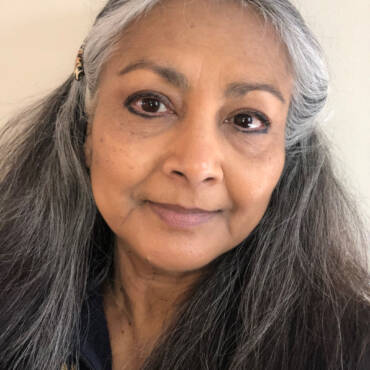
“August” and “Aubade” by Shaheen Dil
“Then, when the black nightingale returns to the forest,
when the audacious sun is high,
I wonder, beneath the waves,
where a few more wing beats would have taken me”
“Then, when the black nightingale returns to the forest,
when the audacious sun is high,
I wonder, beneath the waves,
where a few more wing beats would have taken me”

“I remember your scarf wrapped twice
around my neck on the Central Line I held my swollen stomach
felt first kicks & fresh strawberries we bought already softening”
“Trash-can colored and rusty, it was a car all throat,
all fits and stutters, a guttural language
choked at every breakneck shift of gears,
a devil’s-in-hell kind of loud, so buzz-saw loud
you could feel the fuel catch fire inside it, its inner life burning
with something I was too small to name.”

“This is an elegy
for what can’t be undone—
a sky that sags heavy,
hand over our mouths
that forces us to breathe
with eyes
fingertips
every part we have left.”
“It wasn’t until my fourth or fifth sip of tea this morning that I noticed Miss Nancy Carson was missing her eyebrows. I promptly set the cup down and stared at her across the breakfast table. I wanted to make certain she had not simply hidden her brows under too much white pomade. The girl is at an age where she has begun to prepare her toilette, and painting takes practice to master. But her brows were not covered up. They were gone.”
“I find them in the hollow place—
the friend whose heart collapsed
as the train pulled out,
the one whose daughter
didn’t call to tell me,
the one whose cancer
they said was slow growing
a month ago.”
“I knew who Tim Davis was in high school, but I didn’t introduce myself to him until my mom ran him over with her car. And this is not some kind of “meet-cute” story, where her tires caught his foot as she slowly backed out at the grocery store or something. Rushing home on a drizzly November evening, from a place she should not have been, my mother mowed Tim down as he rode his bicycle to work, paralyzing him below the waist.”
“The bluebirds that should leave each winter
now stay put, even as species after species
goes extinct. But who’d think of things like that
while those bright-backed, grump-faced balls
of brilliance flicker through our yards?”
“Today another patient
chokes: Don’t
let me die—
When her heart stops, there is so much
noise in the room—so many people
swarming, and then things
inserted—
Her legs jerk with every compression.”

“An itch for HE-ness
SHE-ness cannot scratch.
Men are here who are reborn as women,
they swallow pills & take hormone-shots.
He-paint peeled off
so She comes toward void.”

“Dad and Mom got divorced two years ago. Mom says they split up because Dad is selfish and wants to sow his wild oats, two decades too late, and doesn’t want to be burdened by the demands of a family. Dad says they split up because of Sarah. Dad says that the death of a child strips the skin off a marriage, and if the bones underneath aren’t strong, everything falls apart.”

“the women turn pages slowly, so slowly
unsure if that is the vest Katya knitted for uncle
before he went for milk, never came back
each numbered photograph a too-bright gasp of light
the book, a first step with each mass grave
do you recognize this apron? this belt? these boots?”
“Paper gowns are not as soft as cloth gowns are not as soft
as silk as milk which is only soft until it sours”

“But still it was done,
the last thing, really, they made
together. When the morphine
wasn’t enough, I said to her,
Think of those lilies,
all the colors they’ll bring.”

“In her old life, Grammy shelved books via the Dewey Decimal,
never imagined she would need a YouTube video on how to probe a vent.
So much science reduced to the withstanding of unease,
an ISA Brown hen upside down under her arm.”
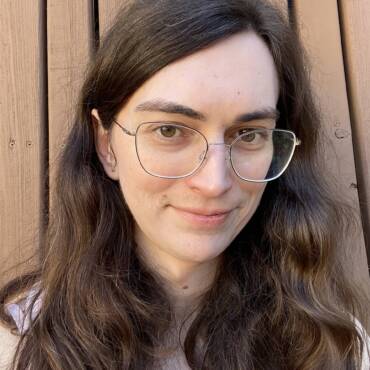
“I looked myself over, the version of me across the table. I was a year younger then, but I was in rough shape. January was obviously only shaving once every few days. His face was covered in that awful black stubble. His hair was a mess. His eyes were tired and vacant behind the glasses. He slouched in the chair, thinking me over. He tapped his fingers on the table, the gears turning, trying to figure out what to say.
‘This doesn’t make sense,’ he said. ‘It’s not possible that we’re trans. It shouldn’t be possible.’
I nodded sympathetically. ‘I get what you’re saying. I understand. Yet here we are.'”

“Two women in hijabs and abayas approach us. One of the women asks, ‘How long will this be going on?’ ‘It’s the community that’s doing this,’ Zenzele answers. ‘So, I guess, as long as the community keeps coming. This is all different people. There’s no one group organizing it.’ The draped women speak to one another in a language that sounds like the wind over the surface of water before they smile at us, nod, and walk on.”

“There are many versions of the American Dream, I want to tell my parents. The one involving a large house with a picket fence and two-car garage is just one of them. Just as there are many versions of your daughter. There’s a version that prays four times a day and recites the Quran. There is a version that enjoys hanging out with friends, including men, on Saturday nights with cans of beer and board games. There is a version that fasts during the month of Ramadan. There is a version that gets pepperoni on her pizza during the rest of the year.”
“’Two weeks,’ Tamara echoes, like she’s mulling it over. Her legs are dangling over the arm of the chair. ‘Why don’t you just break up with him the normal way?’
‘Because that would require confrontation,’ I explain.
‘And knitting an entire sweater is easier than confrontation.’
‘Yes.’
Tamara turns to Lark for support, but he’s nodding solemnly. ‘Yeah, that holds up,’ he says.”
“I imagine Evelin, her flour-sack print dress, brandishing stick dolls with her younger cousin, whose rash and persistent fever earlier that month no one mentioned. I imagine Evelin waking near dawn, whimpering, coughing, hot to the touch. Grandma takes her into their bed, Grandpa having left to cart fuel to farmers. The child sleeps fitfully, radiating heat.”
“The expression that rubbed Luz raw was the one her mother used more often than all of her Ave Marías and all of her Ay Benditos—and she said those a lot. The one proverb that always made Luz feel ill at ease—and she was not too sure why—was: Con la boca cerradita te ves más bonita: you look prettier with your mouth shut.”